Learn from Failure
Among China, the USA, and the UK; Germany has the highest score (65 out of 100) on Hofstede's cultural Uncertainty Avoidance dimension. This means that the German society doesn't feel comfortable with risk taking and is therefore less likely to take decisions that might lead them to a failure.
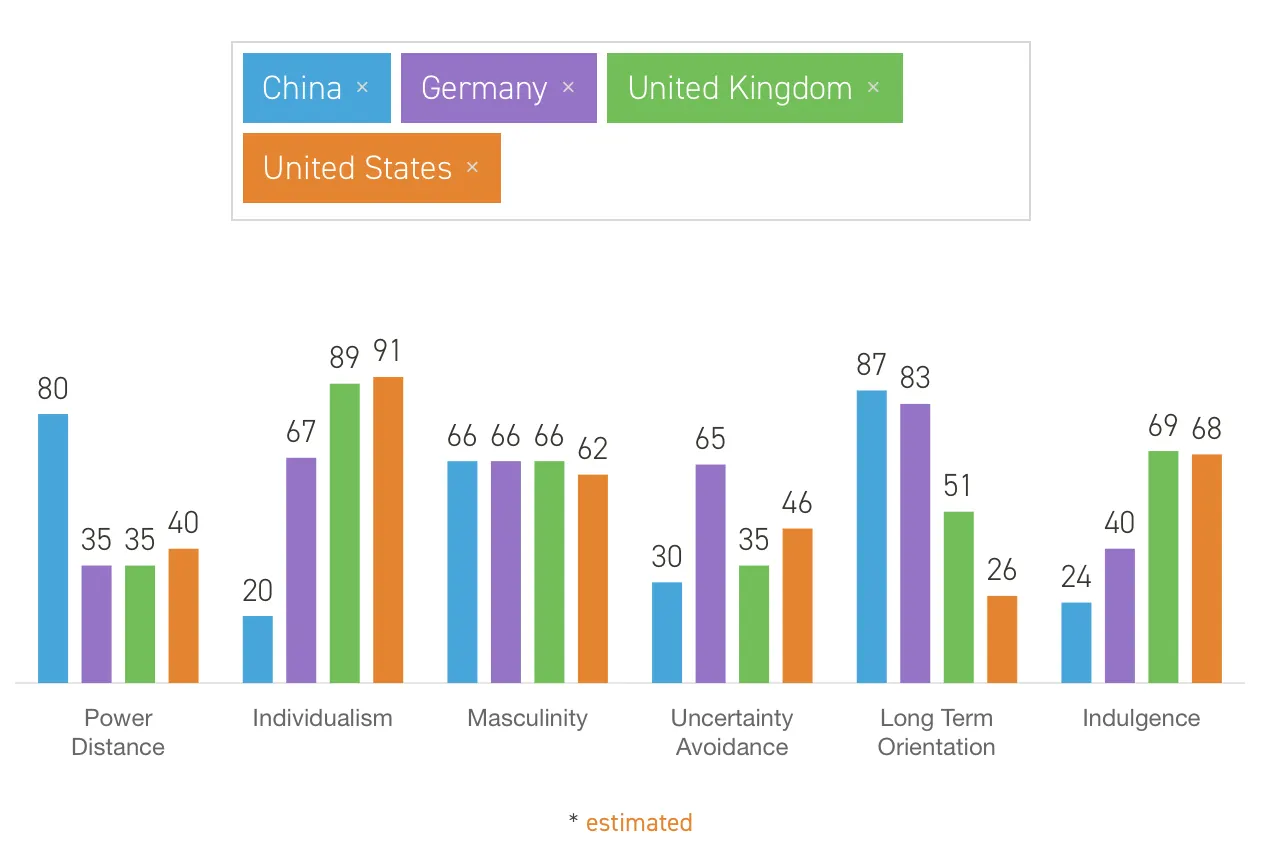
If you want innovation, you need to grant permission to fail.
— ROBERT IGER, The Ride of A Lifetime
define.fail:
be unable to meet the standards set by somebody.
Fear of failure destroys creativity.
— ROBERT IGER, The Ride of A Lifetime
We are failing on a daily basis by not meeting other's expectations, missing deadlines, over promising or whatever other reason one might find. What happens when we fail is that we start feeling shame.
define.shame:
a painful feeling of humiliation or distress caused by the consciousness of wrong or foolish behaviour.
What happens when we fail is that we start feeling shame - a painful feeling of humiliation or distress caused by the consciousness of wrong or foolish behaviour. This is how our mind reacts realising that we did something under our expectations. Being aware of this feeling and recognising its cause may help us learn from a failure. When we recognise that we feel ashamed and identify failure as a reason, we are on a good way to obtain new learnings.
When getting nervous or feel under stress I take a short break and either do a short meditation session (Balance or Humanoo app are both greath) or a conscious breathing exercise: 5 - 6 seconds breath in, 5 - 6 seconds breath out (hearth rate slows down, blood pressure goes down). You can find more about conscious breathing in James Nester's, Breath: The new science of a lost art
define.feedback:
information about reactions to a product, a person's performance of a task, etc. which is used as a basis for improvement.
Making yourself right and others wrong is one of the principal egos mind patterns, one of the main forms of unconsciousness.
— ECKHART TOLLE, The Power of Now: A Guide to Spiritual Enlightenment
The key word is feedback (information about reactions to a person's performance of a task). Being proactive and requesting an honest feedback is the first step to take. Before receiving feedback we should make sure to lock our ego in the other room and accept the feedback with an open mind.
Continuous improvements through intentional practice requires regular feedback.
define.process:
perform a series of mechanical or chemical operations on (something) in order to change or preserve it.
There are no secrets to success. It is the result of preparation, hard work, and learning from failure.
— COLIN POWELL
As a next step we use the information received from the feedback as a basis for improvement by analysing the process (steps) we followed. By revising each step we ask ourselves what we could have done better. Once we identify those steps, maybe we ask ourself why did we did it the way we did. Asking the why a few more times will lead us to the root cause, and finally to the better understanding of our self. As a reward of conducting the analysis and learning more about self, we also want to learn how to recognise that the result of our productive work might become a failure. We want to be able to recognise and flag the failure in a making and avoid possible negative impact.
define.learn:
gain or acquire knowledge of or skill in (something) by study, experience, or being taught.
Every failure comes with specific teachable moments, each of which deserves your undivided attention. If you don’t heed those lessons, your failures are meaningless.
— BILL WOODITCH, Fail More: Embrace, Learn, and Adapt to Failure As a Way to Success
Learning is a process and we should take time to reflect and document our learnings. Some of the best ways to learn are by consulting literature or best practices (Did you know that we're expected to spend up to 40 working hours/year on education and growth?). Others prefer having a mentor, bringing and discussing failures and challenges with they. The best would be to combine both.
define.improve:
develop or increase in mental capacity by education or experience.
The secret to winning, he said, is to point out to great players what they could have done better, even when they have just won a game. Especially when they have just won a game.
— KIM SCOTT, Radical Candor
Finally, we improve by iterating. We repeat process steps with incorporated learnings and we ask for the feedback again. The feedback doesn't necessary have to be requested only after we recognise that we failed. We can request honest and critical feedback even when we succeed with our objective. This helps us sharpen our skills and make even greater impact.